
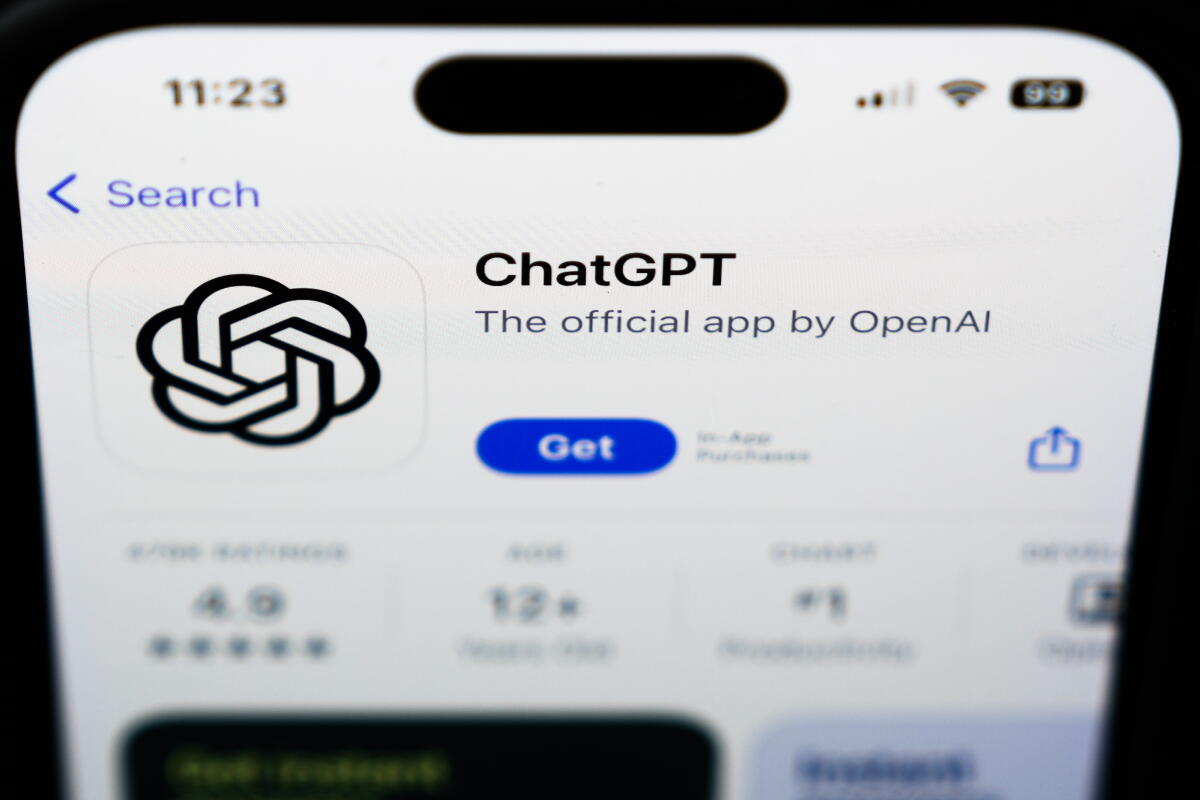
Quick disclaimer: AI moves quickly. There’s every chance OpenAI will have changed something between us pressing publish and you finishing this paragraph. Everything below is correct at the time of writing, but it’s worth getting in touch or checking the latest platform guidance before making any decisions.
What do we actually know about OpenAI Ads?
Earlier this year, OpenAI Ads have moved beyond industry speculation. OpenAI now has an Ads Manager, giving businesses the opportunity to build campaigns and start to target users on the platform. However, before you jump right into setting up an account and utilising your marketing budget, there are some downsides which you should consider.
I know it’s hard to resist and new platforms are exciting, but excitement is not a media plan. The real questions are whether the audience is commercially relevant, whether the targeting matches the area you can serve and whether the platform can produce enough good-quality data to optimise.
My view: OpenAI Ads are worth testing for selected rural and agri advertisers, but only as a measured experiment alongside proven channels, not as a wholesale move away from Google, Shopping or Meta
Ad Types
OpenAI’s advertising system currently allows you to build two types of ads, the first is a chat-based advert, which will show up under the automatically generated response. For these ads, you have control over the images, titles and descriptions.


The second is a product box, very similar to Google Shopping, which will be generated from your product feed. Just like Google, having a well optimised product feed will be the best way to ensure your ads show in relevant chats and you’re not wasting money on chats that aren’t relevant to your products.
Bidding Types
Campaigns can be set up to optimise for impressions, clicks or conversions. Impression campaigns can use CPM-style bidding or a CPC bidding; click campaigns charge for valid clicks; and conversion-optimised campaigns use an optimised CPC model. The conversion option is in open beta and still charges by the valid click, while using a selected conversion event and a CPA bid to influence delivery.
That distinction matters. An CPC campaign is not pay-per-lead or pay-per-sale. If the clicks do not turn into commercially useful enquiries, the advertiser still carries the cost.
Targeting & Reporting
This is where OpenAI Ads have some work to do, the targeting and reporting leaves a lot to be desired. Geographical targeting is chosen at campaign level. Advertisers can choose country, region, postcode and DMA location targeting. However, in the UK, the postcode and city targeting is very hit and miss and there are no options to advertise at a radius around a particular location. You also have the ability to add and exclude custom audiences, which you can upload. It’s also worth noting that if you are running a product-feed campaign, you can only target based on country.
At ad-group level, advertisers can supply free-form ‘context hints’ in a text box. You can populate this as a written description of who to target, “show my ads to users who are interested in land valuations or asking about land prices”, or you can populate it with keywords (like Google) that help guide when an ad may be useful.
I would not treat those context hints as Google-style exact-match keywords. The documentation on the matter calls them guidance, not a guarantee. That could be a strength when a customer describes a detailed problem in natural language, but it also means less direct control over which conversations trigger an impression.
That leads me into reporting, as of today there is no way to monitor chats which your ad has triggered for. It’s highly unlikely that we will ever be able to see chats, but some form of reporting, either by topic or being able to view sentences that triggered your ads would be a huge bonus.
Any Google advertiser will know that negative keywords are vital and at the minute there is no ability to see what your ads have triggered for, let alone exclude them should they be irrelevant.
Measurement & Tracking
OpenAI offers both a browser-based measurement pixel and a server-to-server Conversions API. The reporting includes impressions, clicks, spend, CTR, CPC and CPM, with breakdowns available by product, country and device. Click-through attribution is supported, while eligible accounts may also see a separate one-day view-through metric.
The event model is particularly relevant to rural businesses because it is not limited to online purchases and can be used for lead generation businesses. It also supports events such as leads, appointments, registrations and orders, and the Conversions API can identify actions originating offline, in a physical store, by phone or by email. For a machinery dealer, farm services company or rural venue, that is far more useful than judging success on web form fills alone.
Product Feeds
OpenAI also supports product feeds containing titles, descriptions, prices, availability, images and URLs. The platform can then select an eligible product when the ad serves. This is great news for anyone with an e-commerce website where they sell products.
Within the rural space, there will be lots of e-commerce businesses that will be able to advertise their products through openAI ads. Agricultural parts, fencing supplies, workwear, country clothing, equestrian products and rural retail catalogues are obvious areas to watch, provided stock data and delivery coverage are accurate.
What is not yet clear
The public documentation does not currently give advertisers a universal rate card, a standard minimum commitment (£15 per day), reliable reach forecasts or a clear benchmark for CPCs and conversion rates.
Just as importantly for the rural market, the public campaign interface documents country, region, postcode and DMA targeting, with postcode targeting seemingly limited and no radius options. It also does not publicly expose the mature control set we take for granted elsewhere, such as search-term reports, traditional match types, negative keywords or detailed demographic targeting. Those gaps may change, but they should be treated as unknowns today, not assumed away.
And the final and arguably biggest downside of OpenAI ads is who actually sees them. For now, your ads are only served to users that are using the Free and Go versions of ChatGPT, which means your adverts will likely never show to users who are engaging with the platform the most.
The pros
1. The customer may be closer to a decision than on social
People often use ChatGPT to work through a problem, compare options, create a shortlist or understand what to buy. A conversation about reducing feed waste, choosing a livestock camera, replacing a hydraulic component or planning a rural break can contain much richer intent than a passive social media scroll. That does not automatically mean better conversion rates, but the context is interesting and larger businesses who are advertising across channels can now gain more touch points, through Google Meta and now OpenAI.
2. Nuanced products could benefit from nuanced context
Agricultural purchases are rarely as simple as one broad keyword. Suitability may depend on acreage, crop, livestock type, machinery model, access, season, budget or regulation. These context hints give the platform a way to understand when a product or service may be useful, even when the user has not typed the exact keyword an advertiser would normally bid on.
3. It supports both leads and ecommerce
The combination of chat-card ads, product-feed ads and standard conversion events means the channel is not limited to one business model. It could support a farm software demo, a machinery enquiry, an agronomy consultation, a rural event booking or an online parts order.
4. The measurement foundations are credible
Pixel tracking, server-side conversion events and reporting at campaign, ad-group and ad level are the basics a serious performance channel needs. The ability to pass phone, email, store and offline activity is especially promising for sectors where the final sale happens after a conversation rather than at an online checkout.
5. Early learning has value
There may be an advantage in learning the platform before competition matures, but I would not build a forecast on the assumption that clicks will be cheap. The real early-mover benefit is operational: understanding which propositions, contexts and landing pages work before the channel becomes crowded and costs likely increase.
The cons
1. Geographic targeting
For a national ecommerce brand or a supplier covering several regions, country and regional targeting may be perfectly workable. For a contractor covering a 25-mile radius, a farm shop relying on local footfall or a dealer with a tightly defined territory, it can be difficult to target your regions. You can use postcodes and regions, but the platform doesn’t provide you with a map and it doesn’t seem to provide you with a full list of postcodes for any given region and there are no options for radius targeting or counties.
2. Rural volume could be thin
AI usage may be growing, but niche agricultural conversations are still niche. Low impression and conversion volume makes it harder to test creative, understand seasonality and feed an optimisation model. Conversion bidding is unlikely to rescue a campaign that does not generate enough clean conversion data in the first place and with a minimum budget of £15 per day, it’s a difficult investment with no visibility of where your £15 per day is being spent.
3. Control and diagnostics are still immature
Google Ads & Meta have years of accumulated controls, reporting and third-party tooling behind it. OpenAI Ads has the bones of a performance platform, but advertisers should expect a more limited view of why an ad served and which exact conversational themes produced value. Contextual delivery could be powerful, but while advertisers can’t monitor what is triggering their ads, it is a bit of a leap of faith.
4. Free & Go Users Only
OpenAI ads are only served to users who are using the Free or Go versions of ChatGPT, anyone who is paying for a more advanced version of the platform will not be served ads. What this means for advertisers is that your ads aren’t going to be shown to the users who are most heavily engaging with the platform, reducing your chances to find relevant users.
5. Some agricultural categories may be policy-sensitive
OpenAI reviews every ad. Businesses operating around veterinary medicines, crop protection, financial products, weapons-adjacent equipment or other regulated categories should check the current advertising policies before investing time in a launch plan. Approval should never be assumed from the fact that a product can be sold legally.
So, should rural and agri businesses use OpenAI Ads?
My answer is yes, for the right advertiser, in the right order and with realistic expectations.
The strongest early candidates are businesses with a broad service area, a clear commercial outcome and enough budget to learn. Due to the ability to add product feeds, I think ecommerce businesses could be strong early candidates, as revenue makes tracking the platform’s success much easier. For lead generation businesses, ensuring you can serve nationally and have robust tracking set up would be a must.
I would be more cautious with hyper-local rural services, low-margin products, businesses with very few monthly conversions, advertisers unable to track phone or offline outcomes, and companies whose website does not clearly explain availability, delivery area or lead response. In those cases, fixing the fundamentals will usually outperform adding another media platform.
Most importantly, OpenAI Ads should not displace profitable Google Search or Shopping activity simply because AI is the current talking point. Search remains the channel where a customer explicitly asks the market for a supplier. ChatGPT Ads may sit slightly earlier in the journey, while the customer is diagnosing the problem or deciding what sort of solution to pursue. That makes the channels complementary, not interchangeable.
The bottom line
OpenAI Ads are credible enough to deserve attention and young enough to demand caution. The platform already has familiar buying models, contextual delivery, product feeds and a proper measurement stack. What it does not yet offer publicly is the depth of planning data and fine-grained control that rural advertisers often need.
For an agri or rural business with national reach, good margins (e-commerce) and reliable conversion tracking, I would test it. For a hyper-local operator or a business still struggling with its website, call tracking or core search campaigns, I would wait.
The sensible position is neither ‘ignore it’ nor ‘move the budget now’. It is: get access, understand the controls, design a clean test and make the channel earn its place.

byRob


Ready to Work Together?
 Get in touch